
How Artists Changed San Miguel de Allende
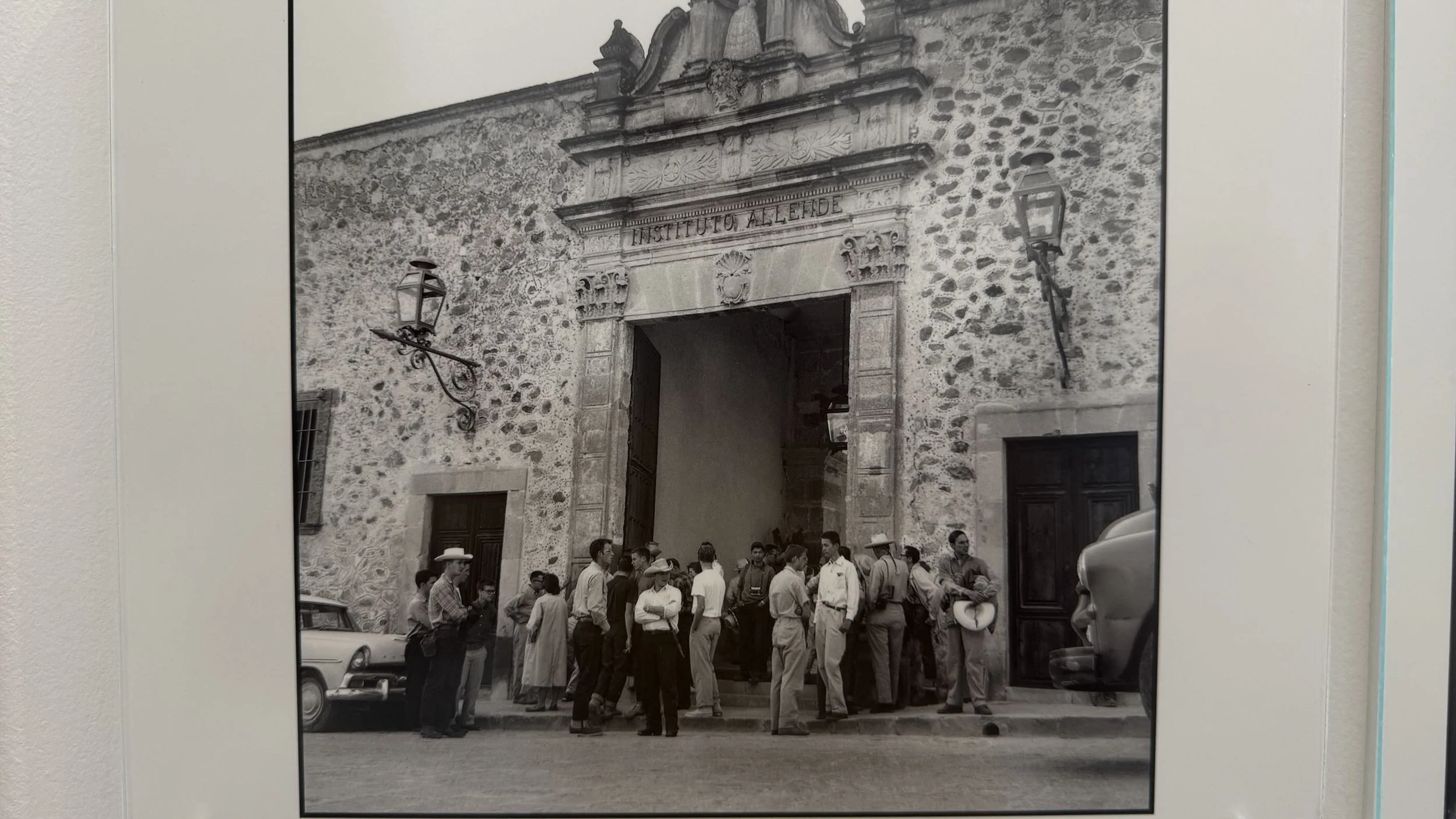
Founded in 1950, the Instituto Allende attracted artists from around the world, including many American veterans studying under the GI Bill.
There is a common belief that artists came to San Miguel de Allende because it was already famous.
The truth is almost the opposite.
Artists helped make San Miguel famous.
Long before the city became an international destination for retirees, food lovers, and travelers, painters, sculptors, writers, photographers, musicians, and art students discovered something extraordinary here. They found a remarkably preserved colonial city, an affordable place to live and study, and a creative community unlike anything else in North America.
Nearly a century later, artists are still arriving for many of the same reasons.
If you’re unfamiliar with the city’s remarkable past, our article on The History of San Miguel de Allende tells the story of how a quiet colonial town became one of Mexico’s most celebrated destinations.
A Colonial City Frozen in Time
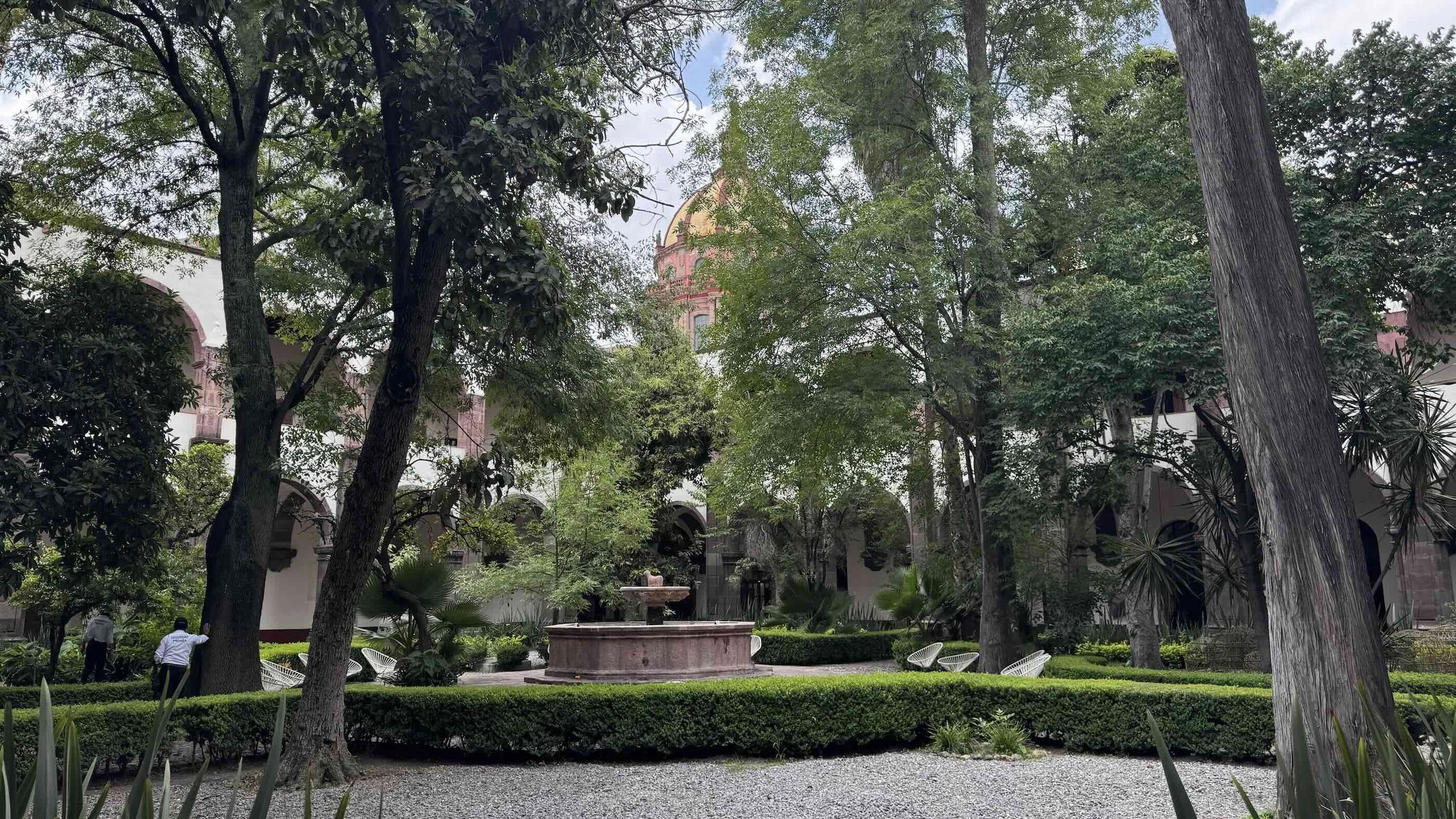
The courtyard of Bellas Artes (El Nigromante) with its central fountain, stone arcades, and gardens.
By the early twentieth century, San Miguel had experienced decades of economic decline. Trade routes had shifted, wealthy families had moved elsewhere, and very little new construction took place.
While this was difficult for the local economy, it preserved something priceless.
Unlike many historic cities that modernized rapidly, San Miguel retained its colonial character. Churches built in the seventeenth and eighteenth centuries still dominated the skyline. Elegant homes surrounded hidden courtyards filled with fountains and gardens. Stone streets remained narrow, and centuries-old plazas continued to serve as gathering places for the community.
For artists, it was like discovering a city that history had carefully protected.
Much of the architecture that first attracted these early artists can still be seen today. If you’d like to learn more about the buildings that define San Miguel, be sure to read The Architecture of San Miguel de Allende: Historic Buildings That Give the City Its Soul.
Stirling Dickinson Saw the City’s Potential
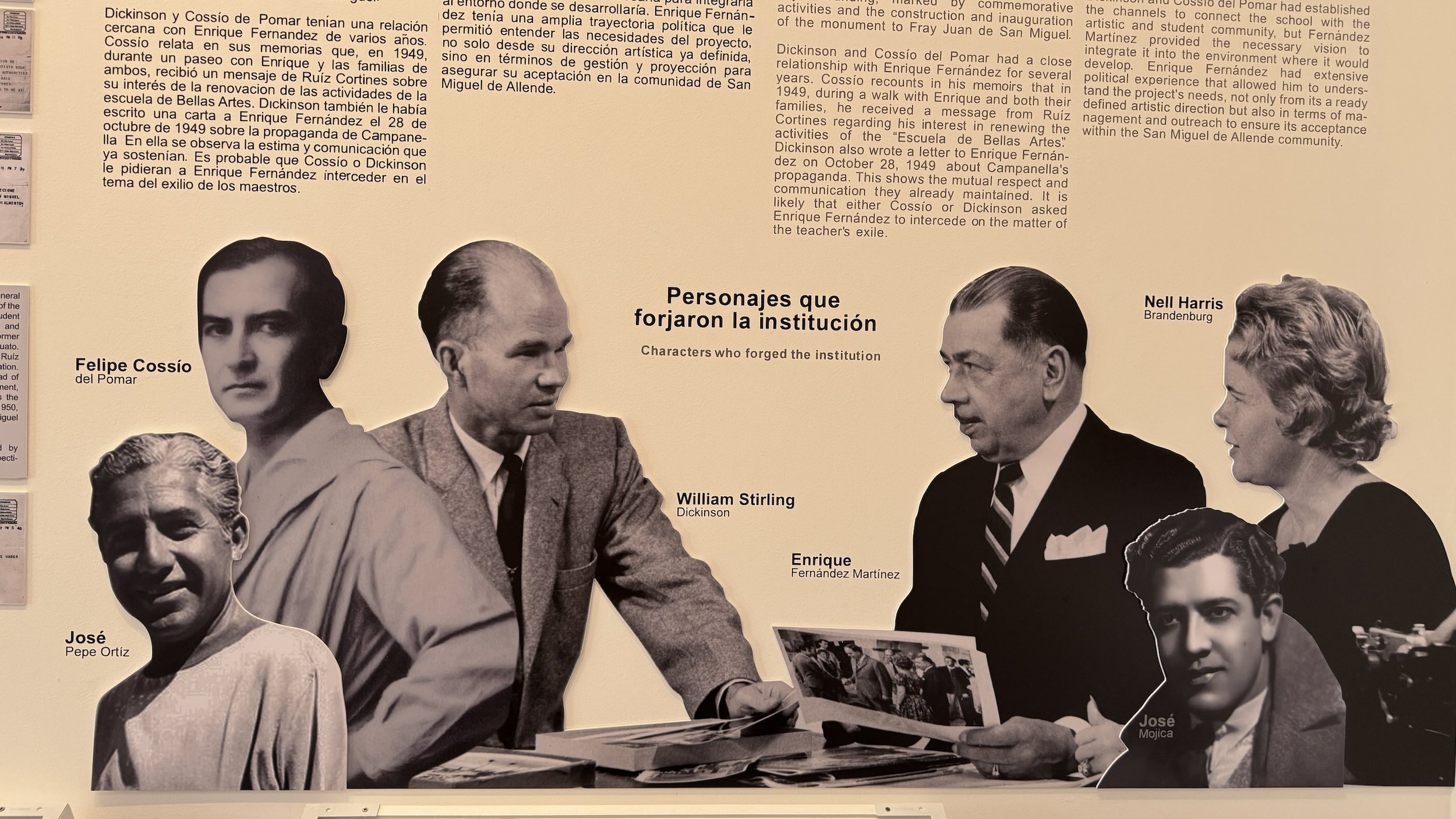
Stirling Dickinson (center) with Felipe Cossío del Pomar, José “Pepe” Ortiz, Enrique Fernández Martínez, and Nell Harris Brandenburg, pioneers of San Miguel de Allende’s artistic renaissance.
One of the first people to recognize what San Miguel could become was American artist Stirling Dickinson.
Dickinson arrived in 1937 while traveling through Mexico. Like many visitors after him, he expected only a brief stay. Instead, he fell in love with the city and spent much of the rest of his life here.
He painted, taught, organized community events, coached local sports teams, encouraged historic preservation, and enthusiastically promoted San Miguel to anyone willing to listen.
More importantly, Dickinson believed artists from around the world would appreciate what he had discovered.
Working alongside Peruvian artist Felipe Cossío del Pomar and local supporters, he helped establish the Instituto Allende in 1950, creating what would become one of the most influential art schools in Mexico.
The GI Bill Opened the Door
The timing could hardly have been better.
Following World War II, thousands of American veterans returned home with educational benefits through the GI Bill. Because the Instituto Allende qualified under the program, veterans could use those benefits to study art in San Miguel.
For many, it was an opportunity that simply didn’t exist elsewhere.
Instead of enrolling in an expensive art school in the United States, they could study painting, sculpture, ceramics, or printmaking while living in one of Mexico’s most beautiful colonial cities.
Some intended to stay a semester.
Many stayed for years.
Others returned home and encouraged classmates, friends, and fellow artists to visit San Miguel for themselves.
Word spread quickly through universities, art schools, and creative circles across the United States and Canada.
What began with a handful of artists gradually became an international movement.
The Light Keeps Bringing People Back
Ask painters why they love San Miguel, and many will mention the light before they mention anything else.
The city’s elevation, clear skies, and dry climate produce crisp light that changes dramatically throughout the day. Early morning casts warm tones across the pink cantera of the Parroquia. By late afternoon, long shadows stretch across cobblestone streets, balconies, and church facades. After summer rains, reflections shimmer on the stones surrounding the Jardín.
Photographers often revisit the same location several times in a single day because every hour produces a different image.
Plein air painters can often be found working in the Jardín Principal, along Calle Aldama, outside the Templo de San Francisco, or overlooking rooftops from one of the city’s many terraces. Subjects seem almost endless. Colonial churches. Flower-filled courtyards. Street musicians. Market vendors. Doorways framed by bougainvillea. Quiet residential streets where little appears to have changed in generations.
Many visitors arrive carrying a camera.
Quite a few leave carrying a sketchbook as well.
Learning From Working Artists
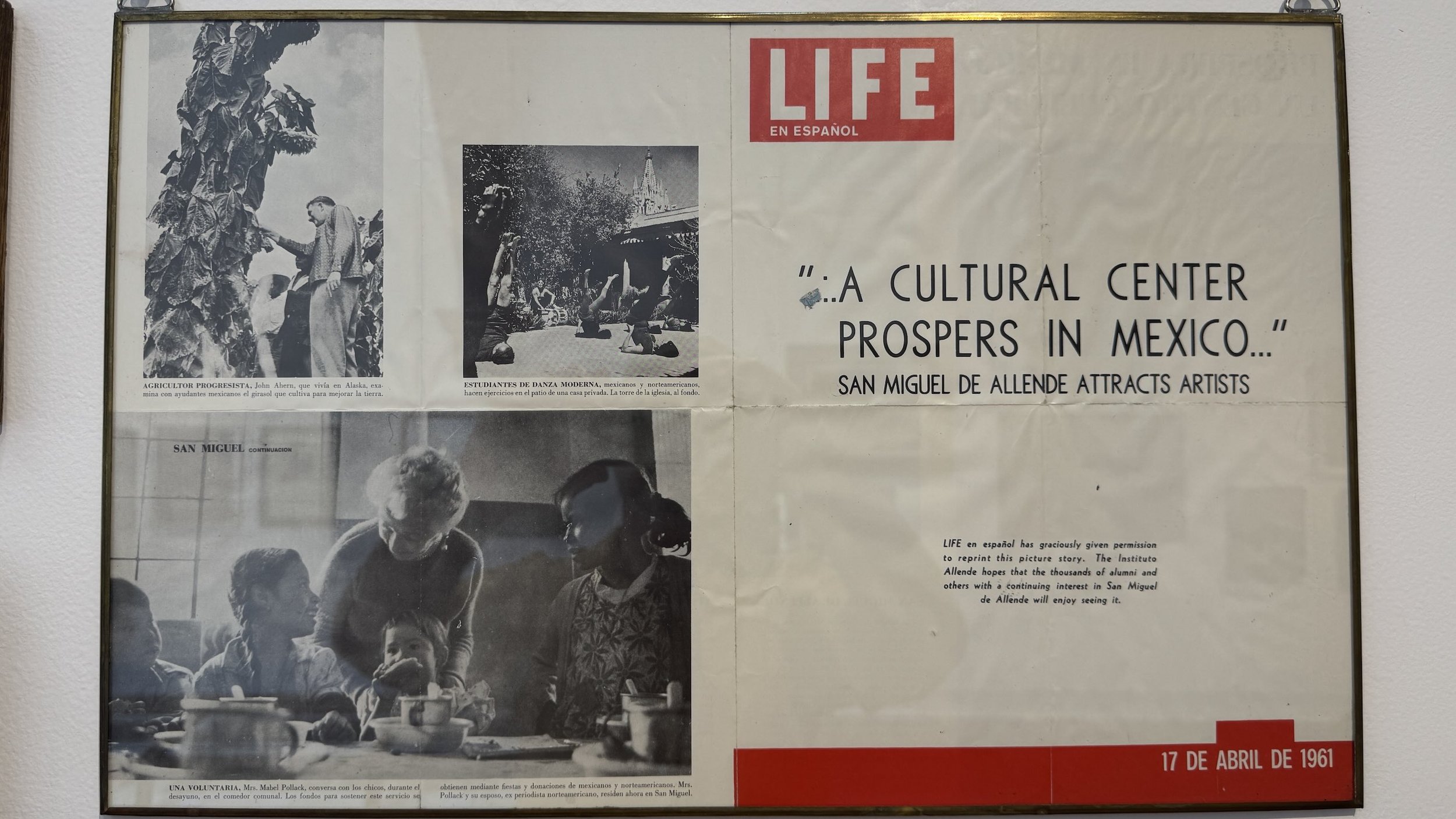
Life magazine’s April 17, 1961, feature brought national attention to San Miguel de Allende as an emerging destination for artists.
One reason artists continue returning to San Miguel is that education never really stops.
Bellas Artes, housed inside the former Convent of the Immaculate Conception, continues offering classes in painting, drawing, ceramics, music, dance, photography, and other creative disciplines. The Instituto Allende remains one of Mexico’s best-known art schools, welcoming students from around the world.
Beyond those two institutions, dozens of independent studios offer instruction in watercolor, oil painting, printmaking, jewelry making, sculpture, weaving, ceramics, photography, and mixed media.
Many instructors are accomplished professional artists whose work is exhibited internationally. Others have spent decades teaching beginners who simply want to develop a new hobby after retirement.
That combination creates something unusual.
A complete beginner and an experienced professional can both find opportunities to improve.
A City for Writers
Visual artists aren’t the only people drawn to San Miguel.
Every February, the San Miguel Writers’ Conference & Literary Festival attracts hundreds of writers, readers, editors, publishers, and literary agents from around the world. Over the years it has welcomed Pulitzer Prize winners, bestselling novelists, historians, journalists, and poets.
For aspiring authors, it’s an unusual opportunity to attend workshops, receive critiques, pitch manuscripts to agents, and learn directly from established professionals without traveling to New York or London.
Throughout the rest of the year, writers can find critique groups, memoir workshops, poetry readings, book clubs, and lectures that continue the conversation long after the conference ends.
As someone writing a novel myself, I understand why so many writers are attracted to San Miguel. The city seems to encourage observation. Every street, plaza, and historic building suggests another story waiting to be told.
If you’re curious about the history behind many of those streets, our article The Stories Behind San Miguel’s Street Names reveals how they received their names.
Galleries Everywhere
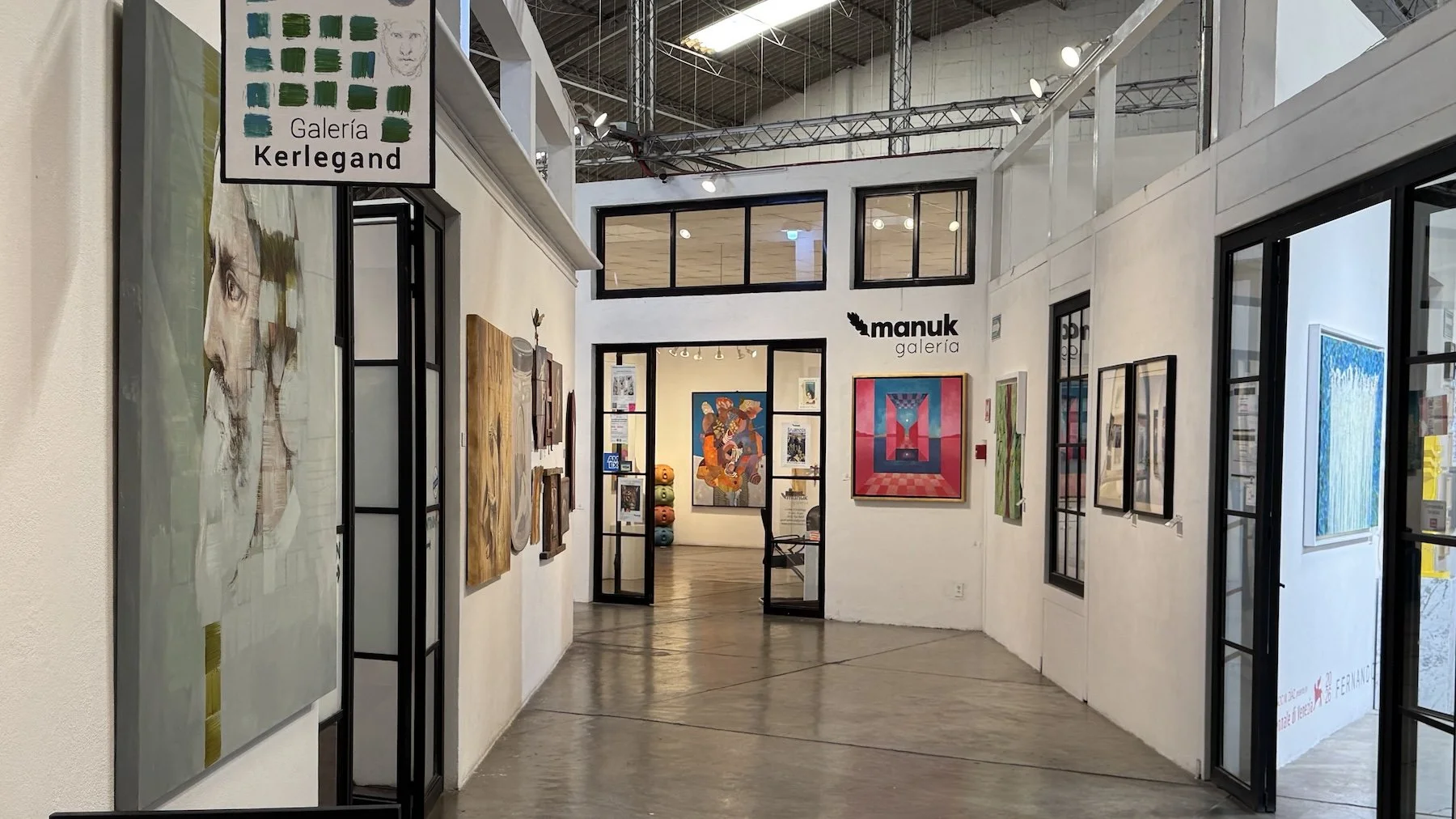
Today, Fábrica La Aurora is home to galleries, artist studios, and design shops, making it one of San Miguel de Allende’s premier destinations for art lovers.
The city’s artistic energy extends far beyond classrooms.
Fábrica La Aurora, once a textile mill, has become one of Mexico’s premier destinations for galleries, artist studios, furniture makers, and design shops. Visitors can watch artists at work, meet gallery owners, and discover everything from traditional Mexican folk art to contemporary sculpture.
Gallery openings are held throughout the year, often giving visitors the opportunity to meet the artists themselves. Community art walks, temporary exhibitions, and open studios make it easy to spend an afternoon exploring San Miguel’s creative side.
It’s one of the reasons many artists return year after year.
There is always something new to discover.
Neighborhoods That Inspire Creativity
Not surprisingly, many artists choose neighborhoods that place them close to the city’s cultural life.
Centro Histórico remains the heart of San Miguel’s gallery scene and offers easy access to museums, Bellas Artes, and countless architectural landmarks. San Antonio has attracted artists for decades because of its relaxed atmosphere and mix of Mexican and international residents. Guadalupe has earned international recognition for its colorful murals, while Guadiana offers quieter residential streets just a short walk from downtown.
If you’re exploring where to live, our Neighborhood Guide to San Miguel de Allende explains what makes each of these neighborhoods unique.
More Than an Art Colony
Calling San Miguel de Allende an art colony doesn’t quite tell the whole story.
Artists didn’t simply move into an already famous city. They helped preserve its architecture, supported its cultural institutions, encouraged restoration of historic buildings, and introduced San Miguel to the wider world. Their influence continues to shape the city’s galleries, schools, festivals, and creative atmosphere nearly a century after Stirling Dickinson first arrived.
If you’re considering purchasing a home in San Miguel de Allende, our article Buying a Home in San Miguel de Allende explains the process, what to expect, and how to navigate buying property in Mexico.
Whether you come to paint, write, photograph, or simply appreciate great art, you’ll discover that creativity isn’t something visitors search for in San Miguel.
It’s woven into the fabric of everyday life.