
The Architecture of San Miguel de Allende: Historic Buildings That Give the City Its Soul
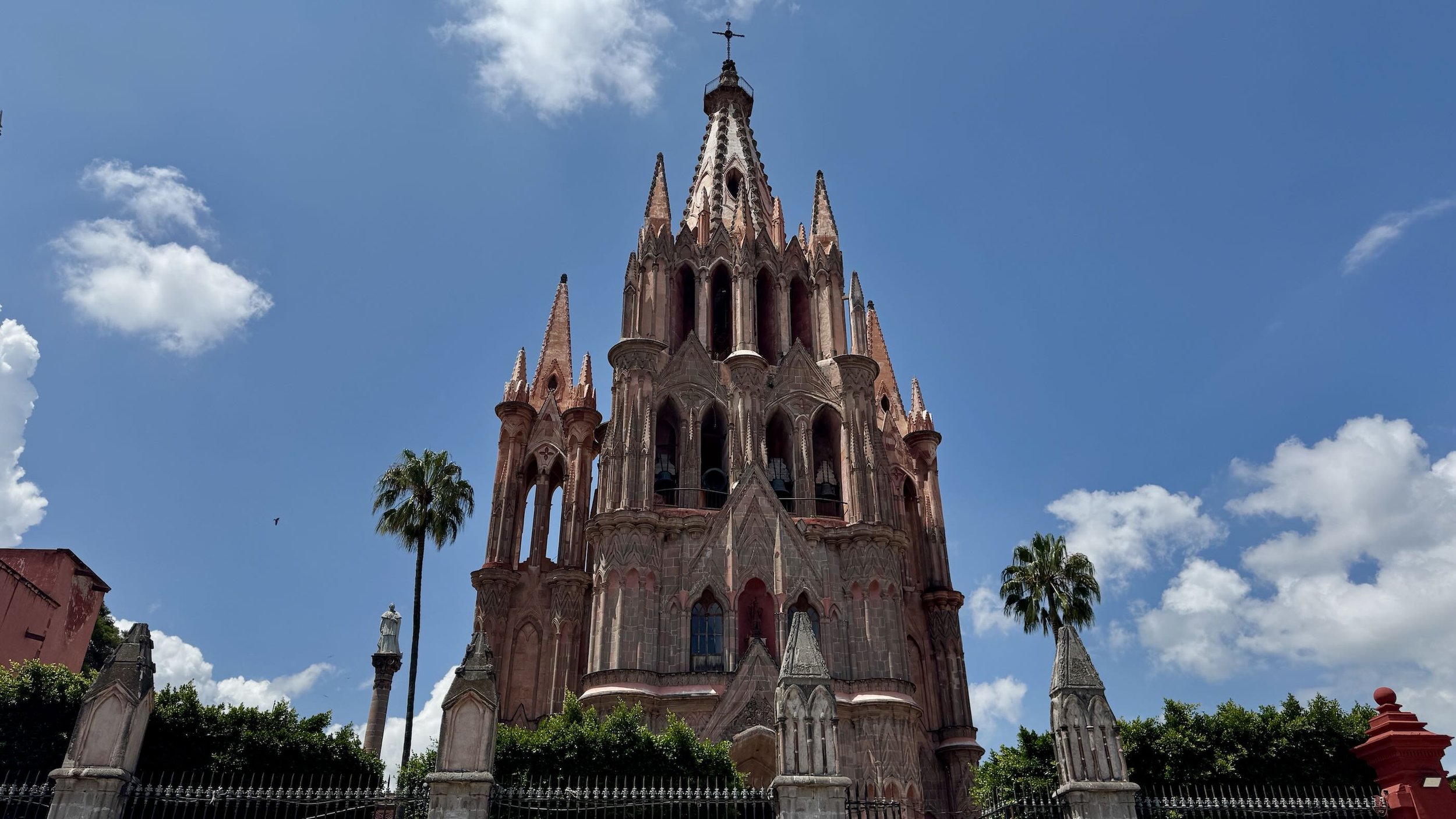
Parroquia de San Miguel Arcángel.
Few cities leave such a lasting first impression as San Miguel de Allende. Visitors often arrive expecting beautiful churches and colonial streets, but they quickly discover something more profound. This is a city where nearly every block tells part of a story that spans almost five centuries. Massive wooden doors conceal quiet courtyards filled with fountains and bougainvillea. Church bells echo across stone streets that have changed little since the colonial era. Elegant mansions built by wealthy merchants now house galleries, boutique hotels, and restaurants while continuing to define the city’s unique character.
San Miguel’s remarkable preservation earned it recognition as a UNESCO World Heritage Site in 2008, but its appeal extends far beyond history. The city’s architecture shapes everyday life, creating neighborhoods that are beautiful to explore and highly desirable places to own a home.
The Architectural Styles That Define San Miguel
One of the pleasures of walking through Centro Histórico is discovering how different architectural styles blend together. Rather than feeling like separate periods frozen in time, each generation added something new while respecting what came before.
Spanish Colonial Architecture
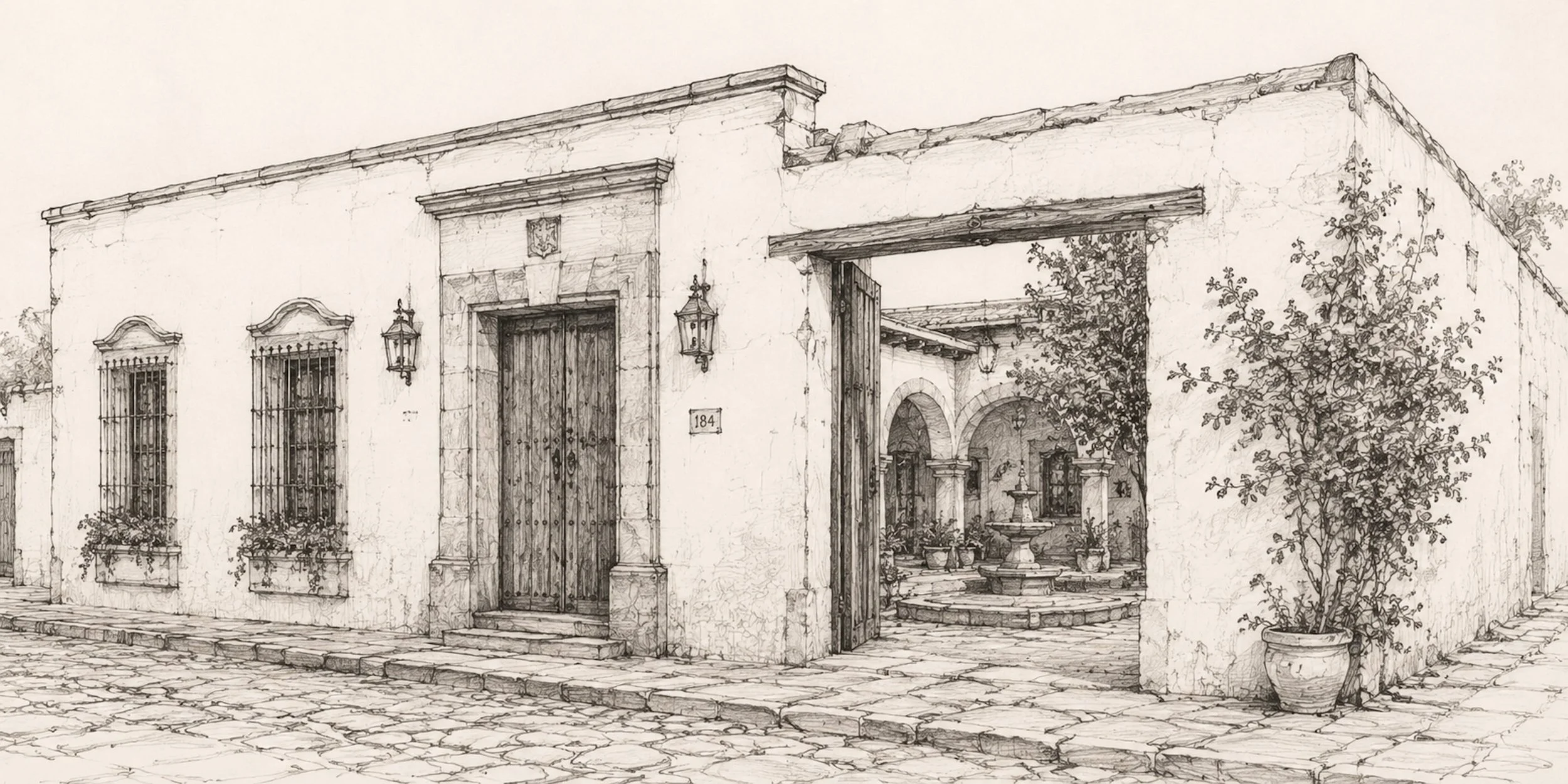
A panoramic pencil sketch of a Spanish Colonial home featuring thick stucco walls, a carved stone entrance, wrought iron windows, a large wooden doorway, and an interior courtyard with arches and a fountain.
Spanish Colonial architecture forms the foundation of San Miguel’s historic center. Built primarily during the 16th through 18th centuries, these homes were designed for both comfort and privacy.
Most feature thick masonry walls that keep interiors cool during warm afternoons, high ceilings that encourage air circulation, and central courtyards where families gathered around fountains and gardens. From the street, many homes appear surprisingly modest. Behind heavy wooden doors, however, visitors often discover expansive living spaces filled with natural light.
Examples of this style can be found throughout Centro, particularly along Calle Aldama, Calle Recreo, Calle Umarán, and around the Jardín Principal.
Baroque Architecture
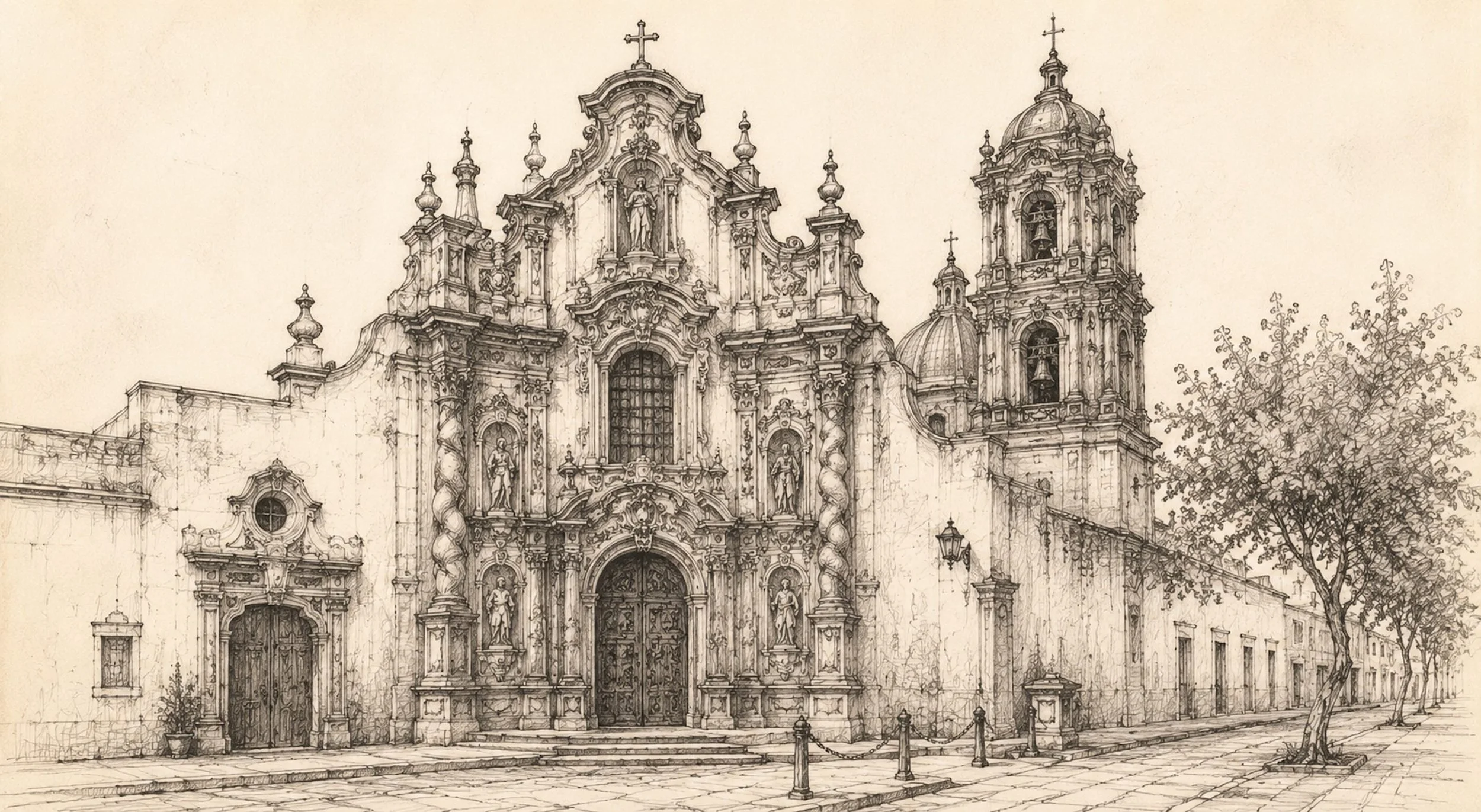
A panoramic pencil sketch illustrating the ornate façades, carved stonework, decorative columns, and sculptural details characteristic of Baroque architecture
As San Miguel prospered through mining and trade, wealthy families and religious orders commissioned more elaborate buildings. Baroque architecture celebrated ornamentation and craftsmanship. Carved stone façades, decorative columns, niches filled with saints, and dramatic entrances reflected both prosperity and devotion.
Some of the city’s finest Baroque examples include the Temple of San Francisco and several of the grand homes surrounding the historic center.
Churrigueresque
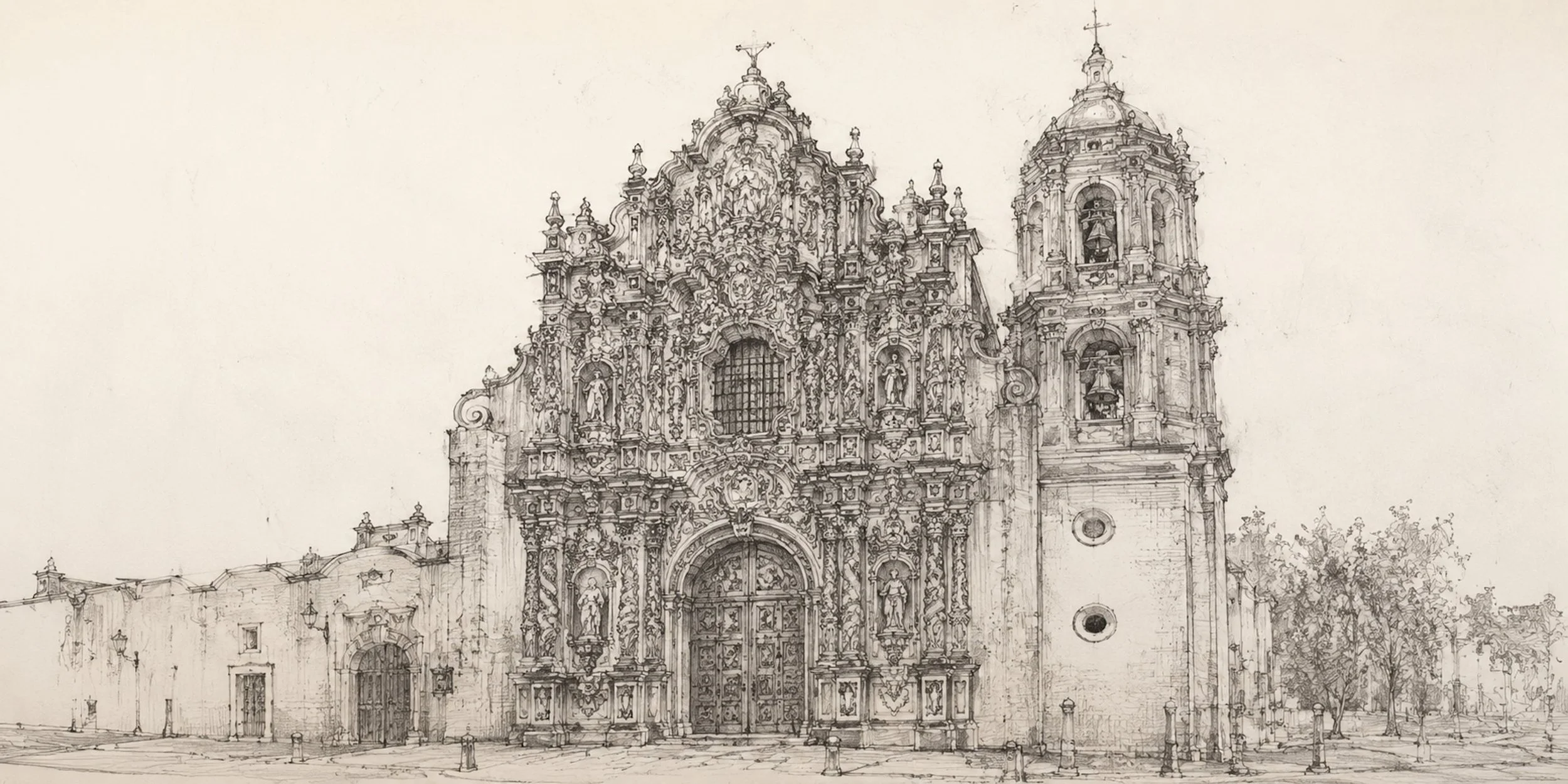
An illustration of Churrigueresque architecture showcasing the elaborate stone carvings, decorative columns, and sculptural ornamentation that distinguish this highly ornate Baroque style.
A particularly elaborate form of Baroque architecture known as Churrigueresque appears in several churches throughout central Mexico.
Rather than emphasizing symmetry, these buildings overwhelm the eye with sculpted stonework. Every surface seems alive with carved figures, floral designs, columns, and religious symbolism. The extraordinary façade of the Temple of San Francisco stands among the finest examples in the country.
Neoclassical Architecture
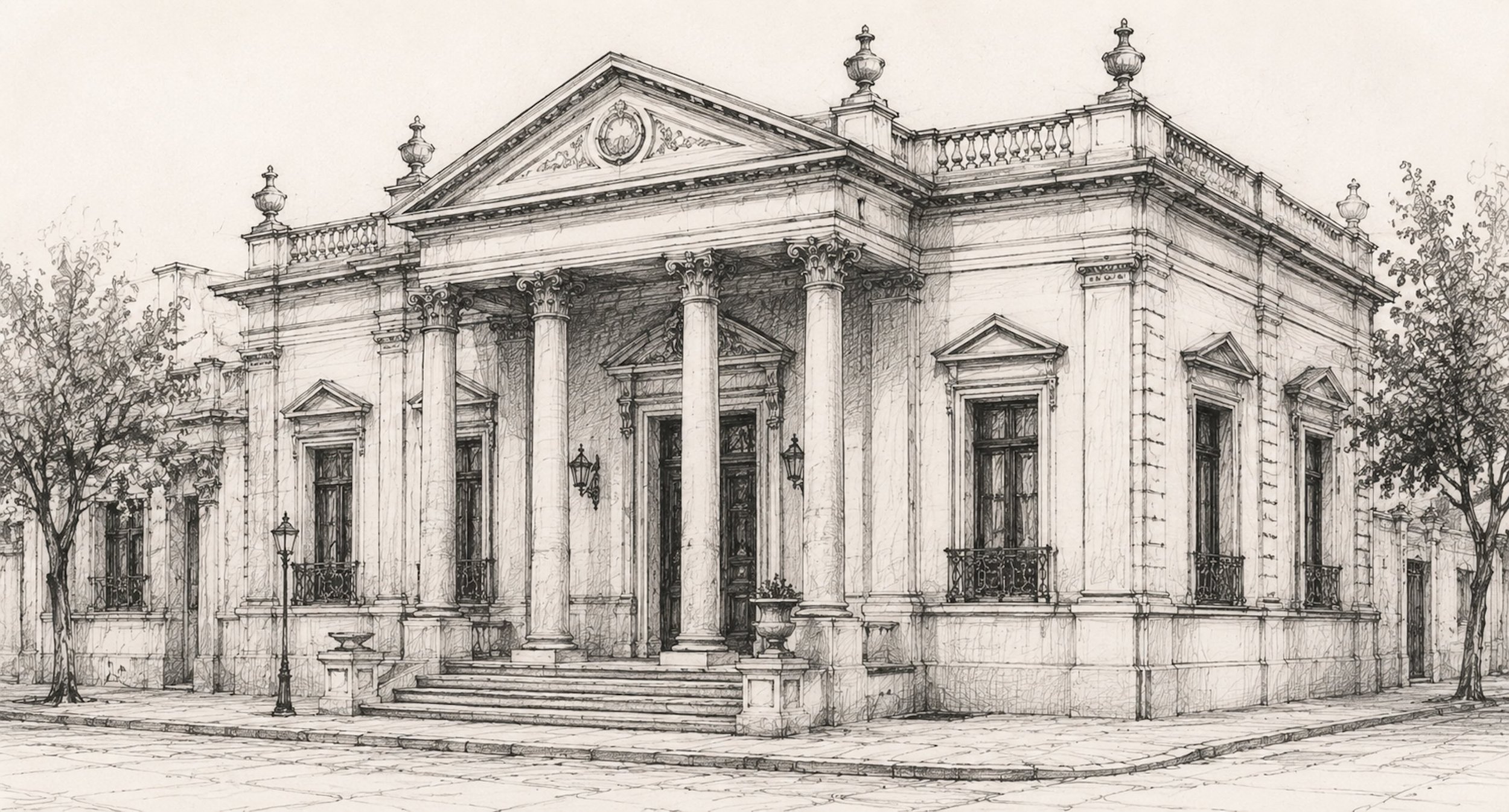
A panoramic pencil sketch illustrating the balanced proportions, classical columns, and restrained elegance characteristic of Neoclassical architecture.
By the late eighteenth century, architectural tastes shifted toward greater restraint. Neoclassical buildings emphasized proportion, balance, and elegant simplicity.
Many older Baroque residences were remodeled to reflect these changing fashions, producing buildings that combine richly decorated entrances with cleaner upper façades. Casa del Mayorazgo de la Canal is perhaps San Miguel’s finest example of this transition.
Neo-Gothic
The city’s most recognizable landmark belongs to a much later period. The soaring pink towers of the Parroquia de San Miguel Arcángel were redesigned in the late nineteenth century in a Neo-Gothic style inspired by European cathedrals. Their graceful vertical lines have become the defining image of San Miguel around the world.
1. Parroquia de San Miguel Arcángel
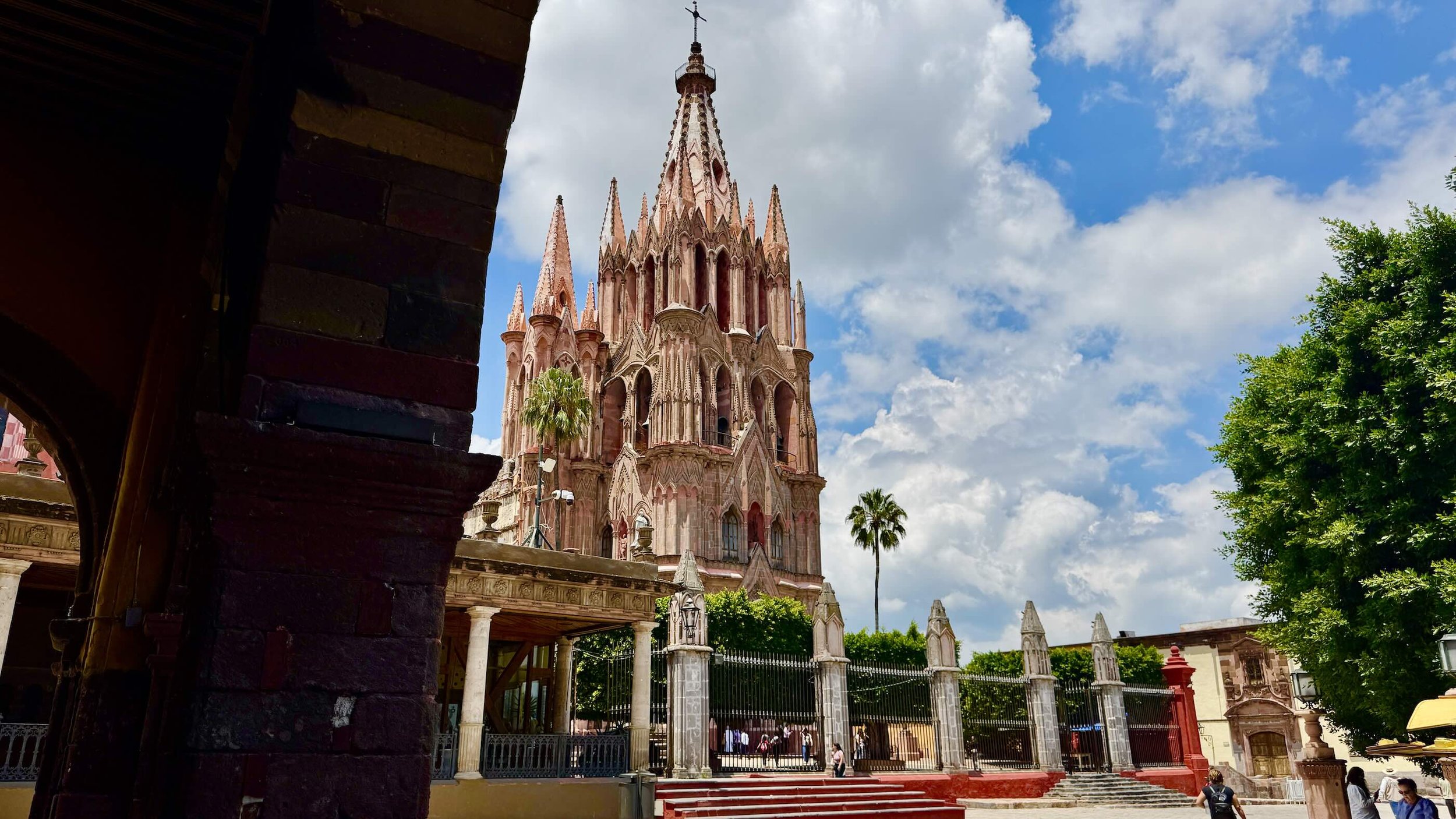
Parroquia de San Miguel Arcangel
Location: Jardín Principal, Centro Histórico
Standing at the heart of San Miguel, the Parroquia de San Miguel Arcángel has become one of Mexico’s most recognizable churches.
Although a parish church has occupied this location since the 1500s, the dramatic pink façade seen today dates largely from the 1880s. Local master builder Zeferino Gutiérrez transformed the original structure into an extraordinary Neo-Gothic landmark using locally quarried pink cantera stone. According to local tradition, he drew inspiration from illustrations of European cathedrals rather than formal architectural plans.
The church anchors the Jardín Principal, where residents and visitors gather throughout the day beneath carefully trimmed laurel trees. Musicians perform in the evenings, families stroll the plaza, and wedding celebrations frequently spill onto the surrounding streets.
Few places better capture the spirit of San Miguel.
2. Casa del Mayorazgo de la Canal
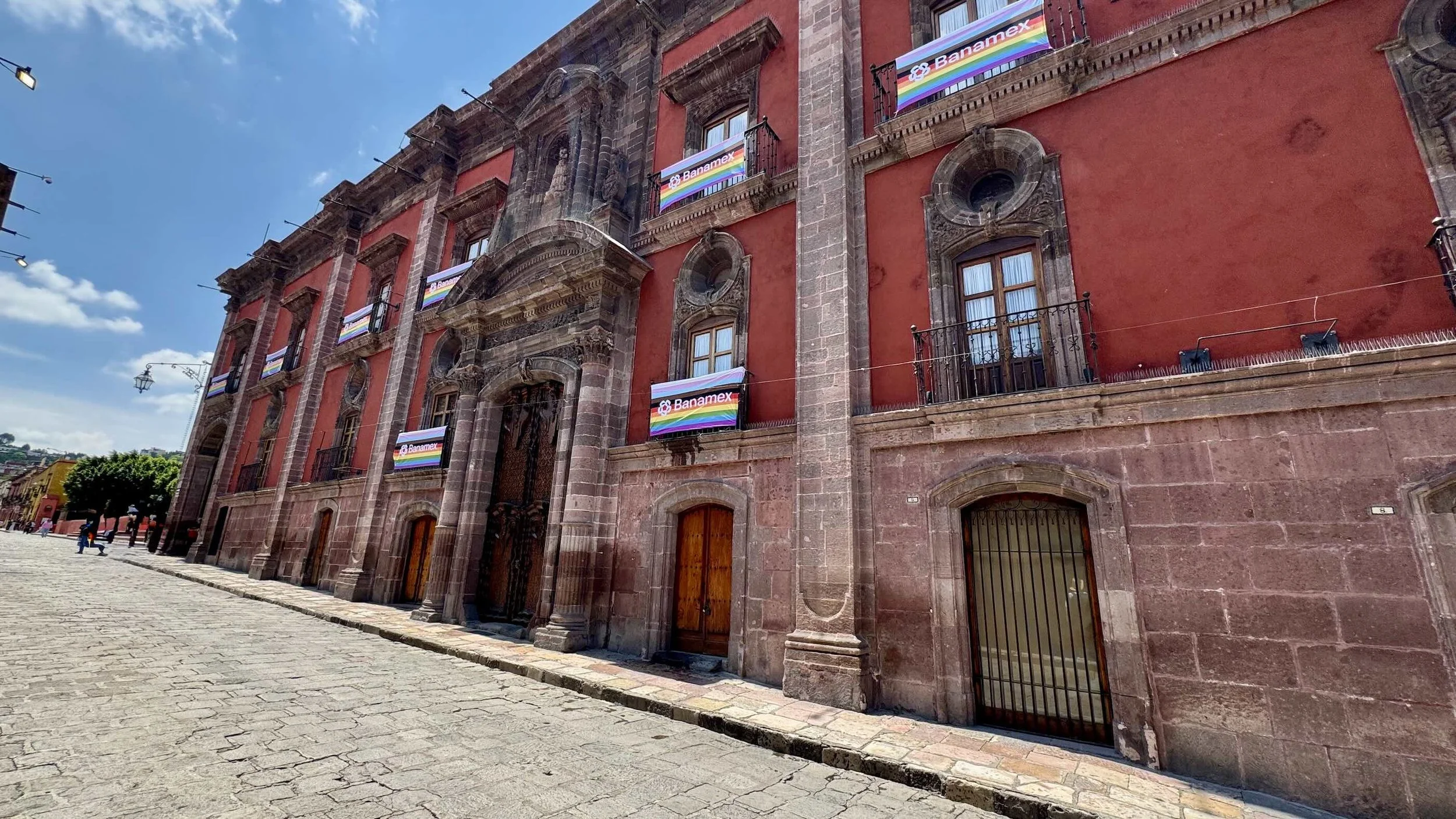
Casa del Mayorazgo de la Canal
Location: Northwest corner of the Jardín Principal
One of the city’s most elegant residences occupies a prominent corner overlooking the main square. Built for the wealthy De la Canal family during the eighteenth century, Casa del Mayorazgo reflects San Miguel’s prosperity during the colonial period.
Its carved stone entrance remains one of the city’s architectural masterpieces. While the doorway displays elaborate Baroque craftsmanship, much of the remainder of the façade reflects the growing influence of Neoclassical design. Together they illustrate a fascinating moment when architectural tastes were changing.
Today the building serves as a cultural center operated by Banamex and regularly hosts art exhibitions and cultural events.
3. Templo de San Francisco
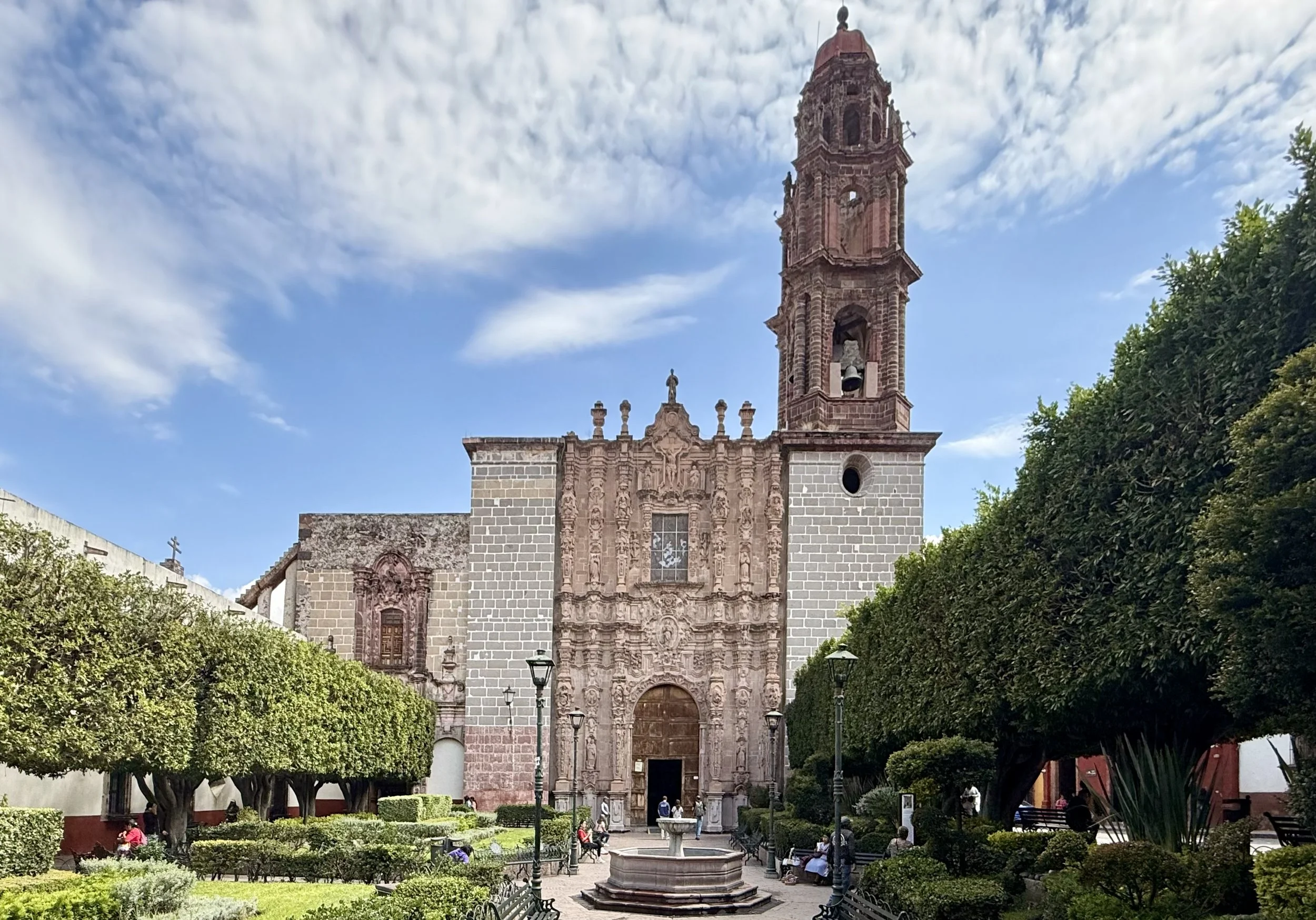
The Templo de San Francisco is renowned for its elaborate Churrigueresque stone façade and elegant bell tower.
Location: Corner of Calle San Francisco and Juárez
Just a short walk from the Jardín stands one of the finest examples of Churrigueresque architecture in Mexico.
Construction began in the eighteenth century, and the richly carved façade rewards careful study. Saints, scrollwork, floral motifs, columns, and decorative niches combine to create an astonishing display of stone craftsmanship.
Its elegant bell tower, designed later by the renowned architect Francisco Eduardo Tresguerras, adds another architectural layer to the complex.
Many visitors photograph the church from across Plaza San Francisco, where the afternoon light beautifully highlights the intricate carvings.
4. Bellas Artes
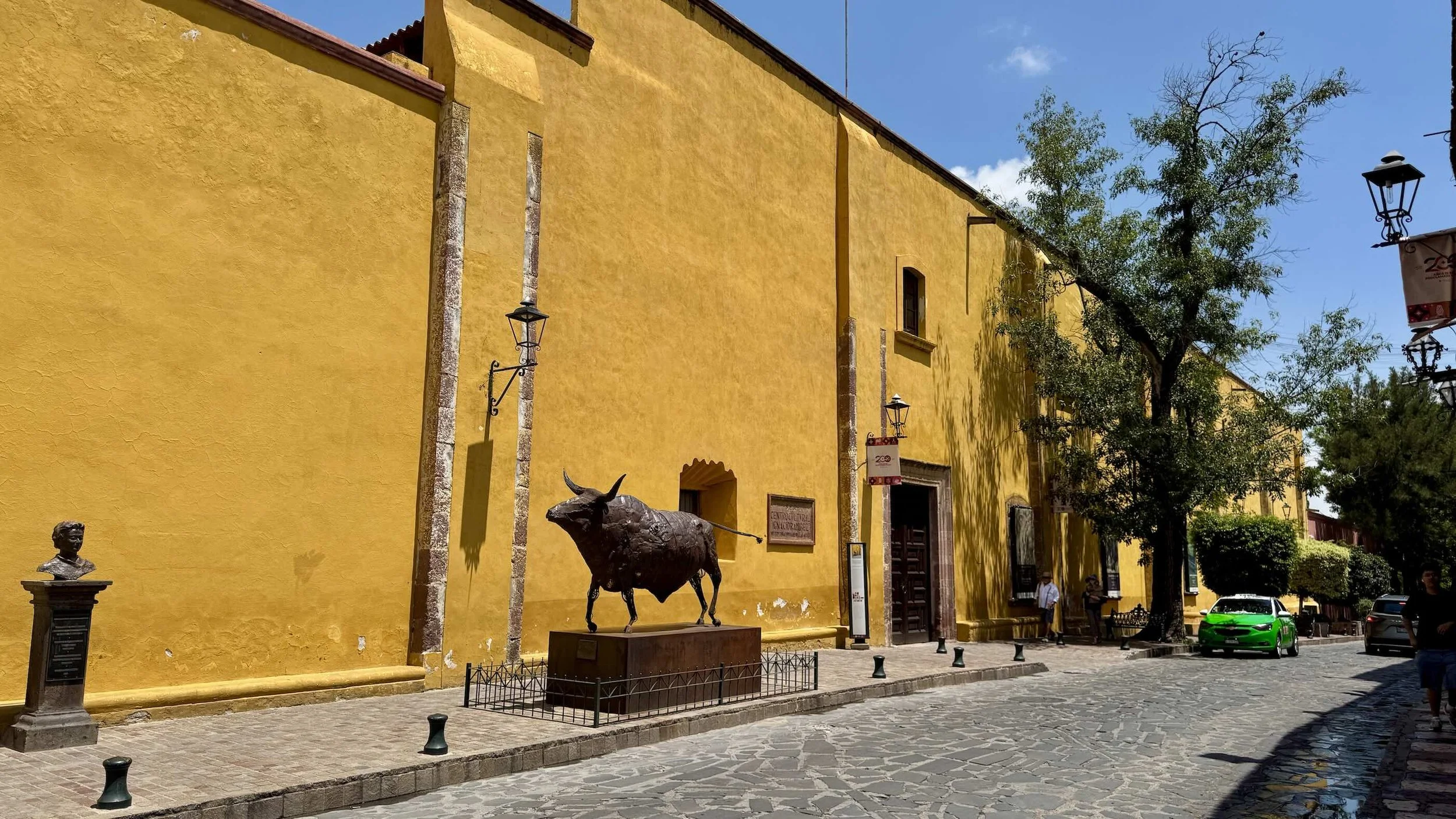
An excellent example of Spanish Colonial architecture with Baroque influences, centered around a traditional convent courtyard.
Location: Hernández Macías 75
Behind a simple entrance lies one of San Miguel’s most peaceful spaces.
Originally constructed as the Convent of the Immaculate Conception in the eighteenth century, the complex now houses the Bellas Artes cultural center. Visitors enter a tranquil courtyard shaded by mature trees and centered around a graceful fountain. Classrooms, studios, galleries, and performance spaces surround the courtyard, continuing a tradition of creativity that has helped shape San Miguel’s international artistic reputation.
Inside, visitors can also view an unfinished mural by David Alfaro Siqueiros, one of Mexico’s great muralists.
5. El Oratorio de San Felipe Neri
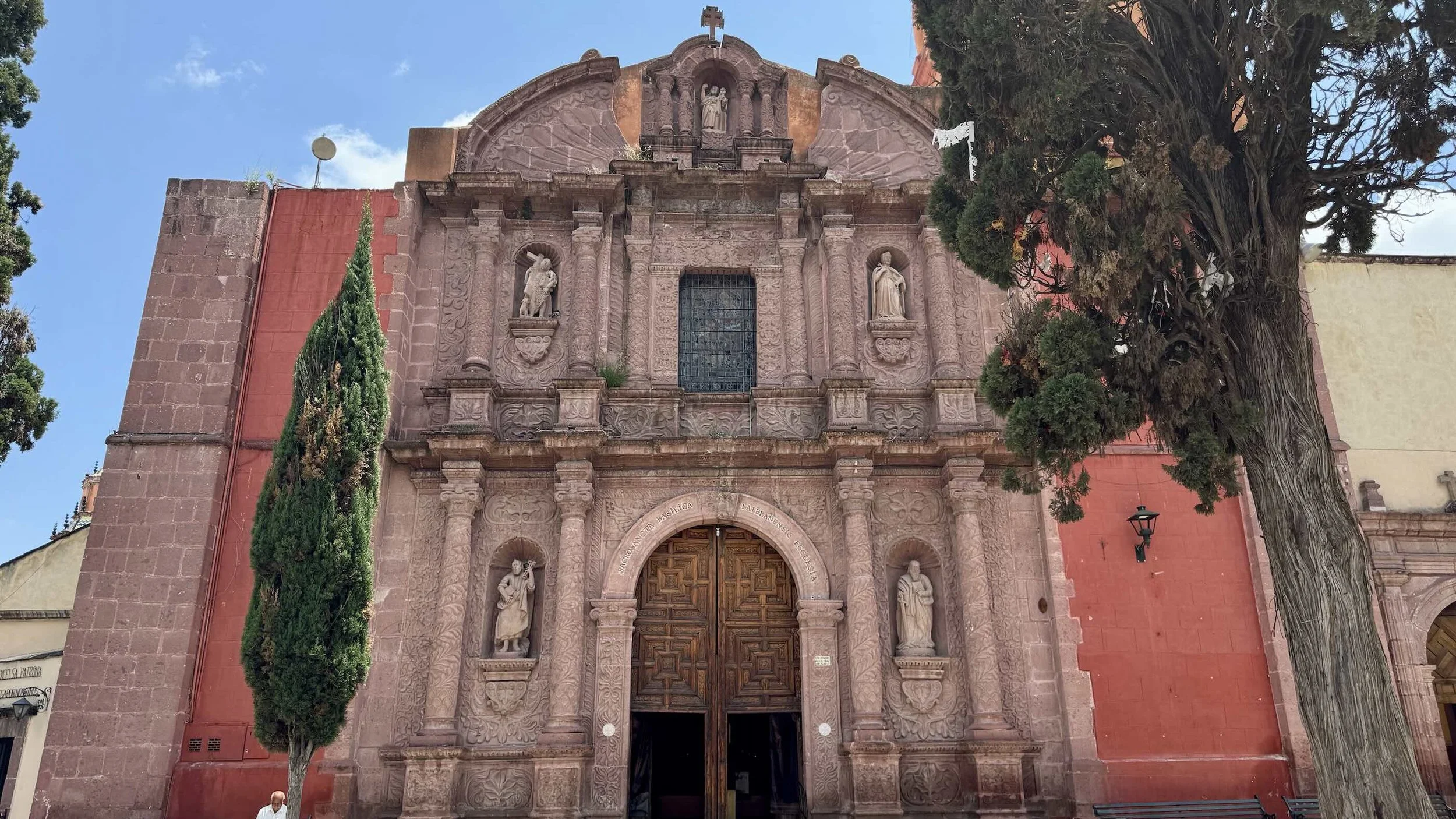
The El Oratorio de San Felipe Neri is primarily Baroque, with some Neoclassical elements that were added as construction continued over several decades.
Location: Calle Insurgentes near Plaza Cívica
Many first-time visitors overlook El Oratorio simply because the Parroquia receives so much attention.
Completed over several decades during the eighteenth century, the church combines graceful domes, richly decorated chapels, and an impressive Baroque interior. The spacious sanctuary creates a sense of quiet reflection, while the exterior harmonizes beautifully with the surrounding historic streets.
It remains one of Centro’s architectural treasures and rewards anyone willing to wander a few blocks beyond the busiest tourist routes.
6. Casa de Ignacio Allende
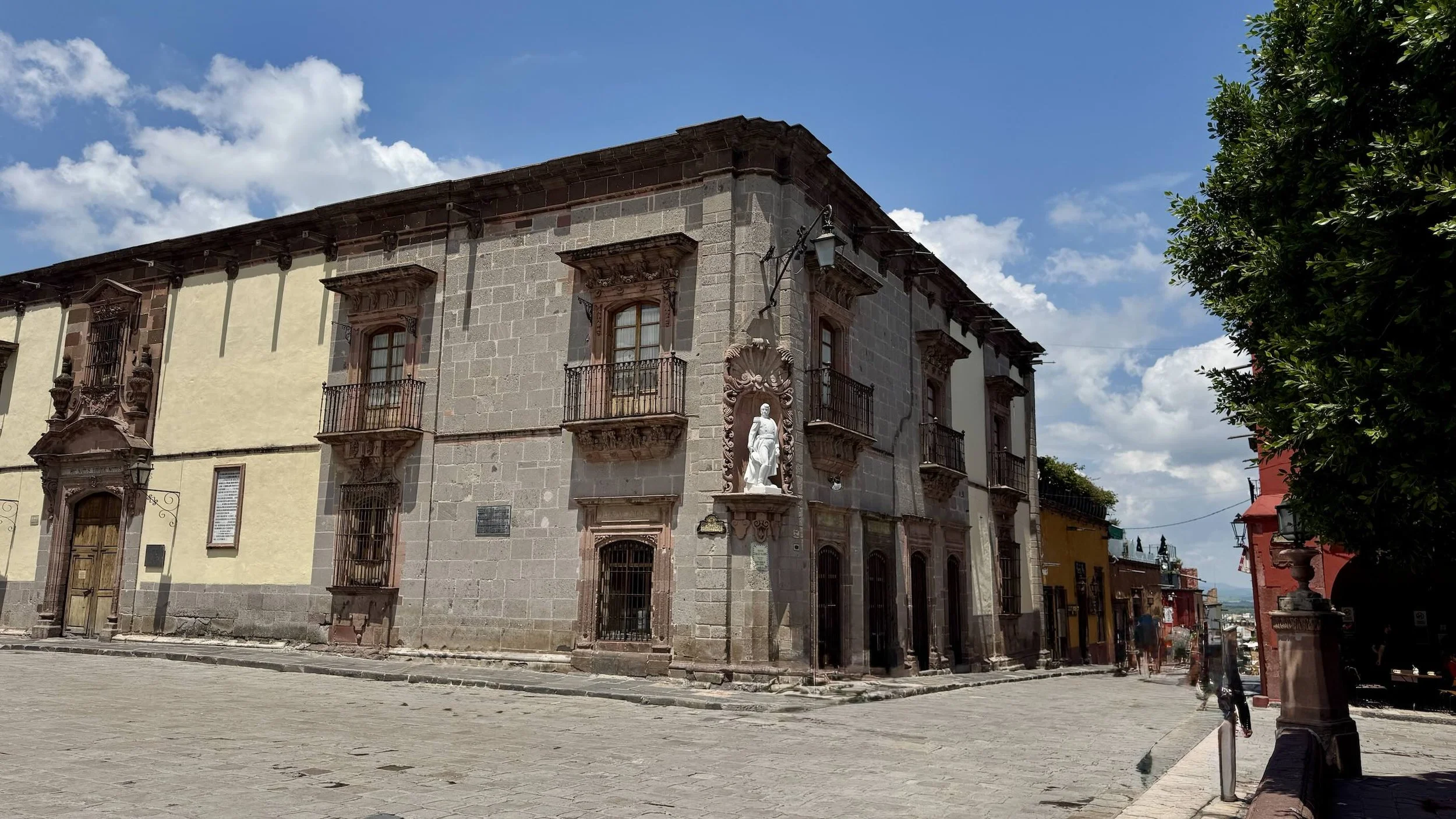
Casa de Ignacio Allende, a beautifully preserved Spanish Colonial mansion, is now home to the Regional Historical Museum.
Location: Calle Cuna de Allende 1
The birthplace of Ignacio Allende offers an opportunity to understand how one of San Miguel’s wealthiest families lived during the colonial era.
Built in the eighteenth century, the mansion surrounds an elegant central courtyard and features thick stone walls, graceful arches, carved balconies, and finely crafted wooden details. Today it serves as the Regional Historical Museum, where visitors can explore both the life of Allende and the broader history of the region.
Even those with only a casual interest in Mexican history often find themselves admiring the home itself as much as the exhibits inside. To learn more about Ignacio Allende’s role in Mexico’s fight for independence and how San Miguel helped shape the nation’s history, read our article The History of San Miguel de Allende: From Frontier Outpost to World Heritage City.
The Streets Are Part of the Architecture
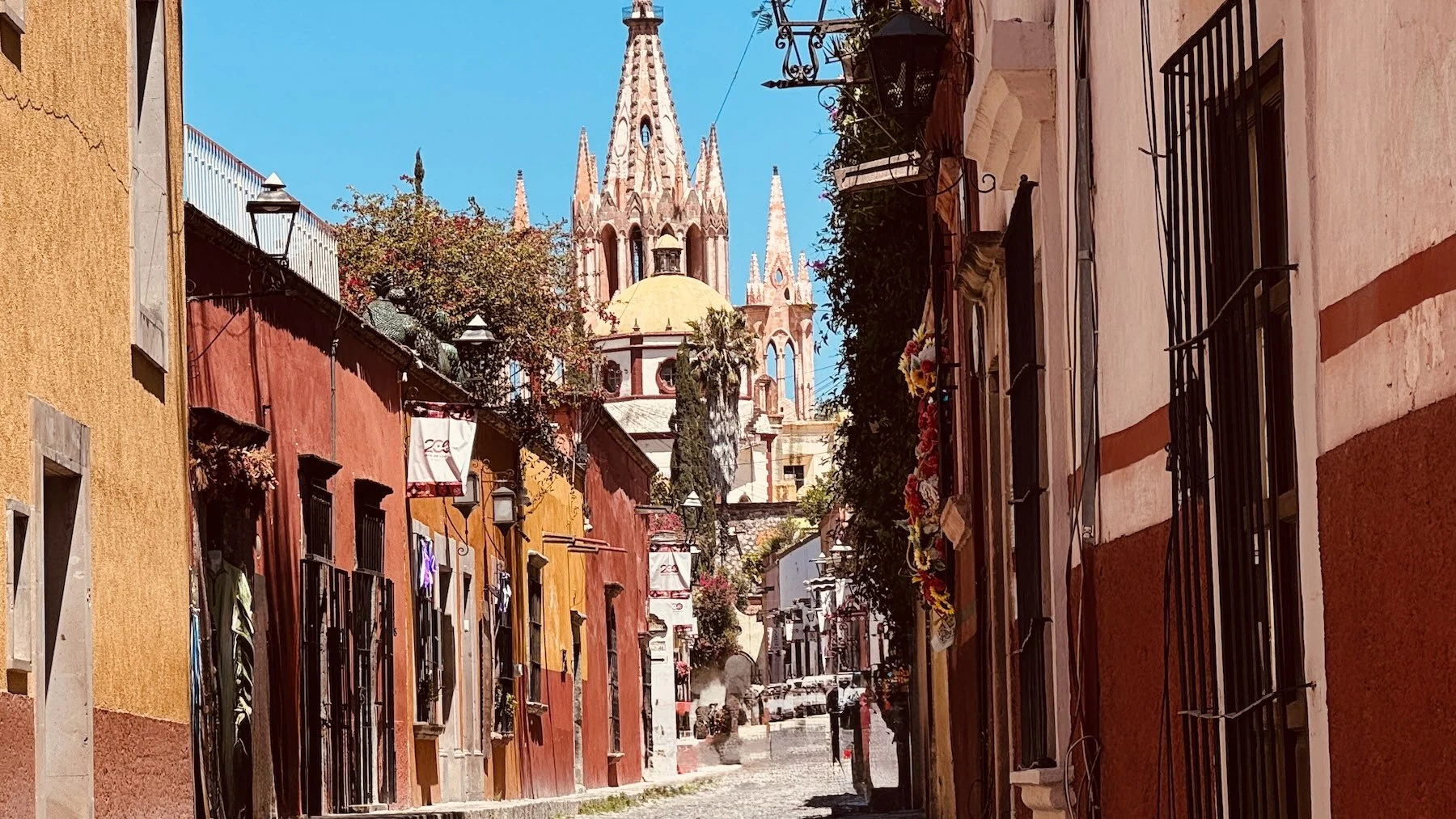
Aldama with View of the Parroquia
San Miguel’s architecture extends far beyond its famous landmarks.
Walking through Centro reveals carefully proportioned streets lined with stone sidewalks, colorful façades, wrought iron balconies, flowering vines, carved cantera window surrounds, and centuries-old wooden doors. Many homes maintain rooftop terraces with views of church domes rising above the city.
One of the greatest pleasures is discovering hidden courtyards. What appears to be a modest entrance from the street often opens onto gardens, fountains, arcades, and peaceful outdoor living spaces that remain invisible until someone opens the door.
The city’s streets are filled with stories as well. If you’ve ever wondered why so many streets have unusual names, take a look at our article on The Stories Behind San Miguel’s Street Names.
Why the Historic Center Looks So Well Preserved
Preserving San Miguel’s character requires careful planning.
Within the historic center, renovations and new construction must follow guidelines established to protect the city’s architectural heritage. Building heights, materials, exterior colors, windows, doors, and signage all receive careful review.
These regulations help maintain the visual harmony that residents and visitors appreciate every day. While individual buildings evolve over time, the city retains the cohesive appearance that makes walking through Centro such a memorable experience.
Colonial Homes Were Designed for Everyday Living
Many architectural features that attract buyers today originally served practical purposes.
Central courtyards admitted sunlight while providing private outdoor space. Thick masonry walls moderated indoor temperatures throughout the year. High ceilings encouraged natural ventilation, while covered arcades created shade during the hottest months. Fountains and gardens helped cool the surrounding air while adding beauty to daily life.
These thoughtful design principles continue to influence how people experience their homes centuries later.
Modern Homes Inspired by Tradition
Architects building in San Miguel today frequently draw inspiration from these historic traditions.
Many contemporary homes incorporate interior courtyards, handcrafted wood beams, cantera stone, rooftop terraces, fireplaces, lush gardens, and large indoor-outdoor living areas. Modern kitchens, energy-efficient construction, solar power, and expansive glass walls are often blended with timeless architectural elements that feel entirely at home in San Miguel.
Neighborhoods such as Guadiana, Ojo de Agua, Atascadero, and Los Frailes showcase many excellent examples of this balance between traditional inspiration and modern comfort.
If you’re exploring where to live, our Neighborhood Guide to San Miguel de Allende offers an overview of the city’s most popular residential areas.
Why Architecture Matters When Buying a Home
Architecture shapes far more than the appearance of a city. It influences how neighborhoods feel, how people interact with one another, and how residents experience daily life.
Whether you’re searching for a restored colonial home just steps from the Jardín or a contemporary residence inspired by centuries of local tradition, San Miguel offers something increasingly rare: a city where thoughtful preservation and modern living exist side by side.
Owning a home here means becoming part of a community that values craftsmanship, history, and beauty. Those qualities have drawn artists, writers, retirees, entrepreneurs, and travelers to San Miguel for generations. They continue to make it one of the most remarkable places to call home in all of Mexico.
Learn more about purchasing a home in San Miguel de Allende here.