
What Do San Miguel’s Street Names Mean? The Hidden History Beneath Your Feet
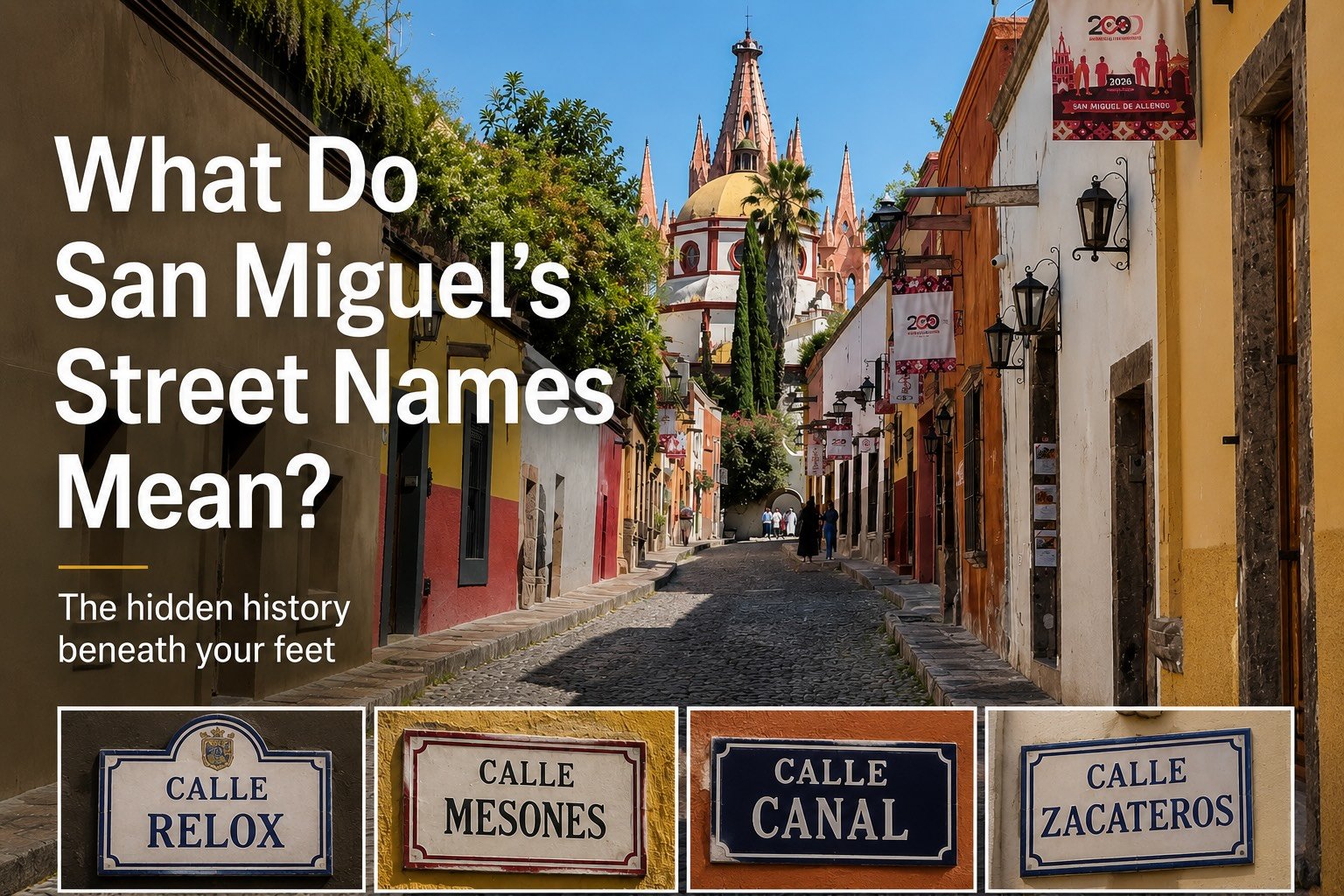
Most of us walk San Miguel’s streets without giving their names much thought.
We meet friends on Umarán, drive down Insurgentes, stroll along Aldama, or head to dinner on Zacateros. The names become so familiar that we stop noticing them. Yet every one of those streets tells a story. Together they form a living record of the people, trades, families, beliefs, and events that shaped San Miguel de Allende over the past 500 years.
In many cities, street names are little more than directions. In San Miguel, they are pieces of history hiding in plain sight.
To learn more about the city’s architectural heritage, read our guide to The Architecture of San Miguel de Allende: Historic Buildings That Give the City Its Soul.
The Heroes Who Gave the City Its Name
Few places in Mexico are as closely tied to the country’s struggle for independence as San Miguel de Allende.
The city itself bears the name of Ignacio Allende, one of the most important leaders of the Mexican War of Independence and a native son of San Miguel. In fact, the city officially became “San Miguel de Allende” in 1826 as a tribute to his role in the movement.
Other streets continue the theme. Hidalgo honors Miguel Hidalgo y Costilla, the priest whose famous “Grito de Dolores” ignited the revolution in 1810. Insurgentes pays tribute to the countless men and women who joined the fight against Spanish colonial rule. Aldama remembers Juan Aldama, another key figure in the movement.
Today, many visitors know Aldama Street for a different reason. Its iconic view toward the Parroquia has become one of the most photographed scenes in Mexico. Yet behind the postcard-perfect image lies a reminder that San Miguel was not simply a beautiful colonial town, it was one of the places where Mexico’s history was forged.
To learn more about the history of San Miguel de Allende, read our article The History of San Miguel de Allende, From Frontier Outpost to World Heritage City.
The Families That Helped Build Colonial San Miguel
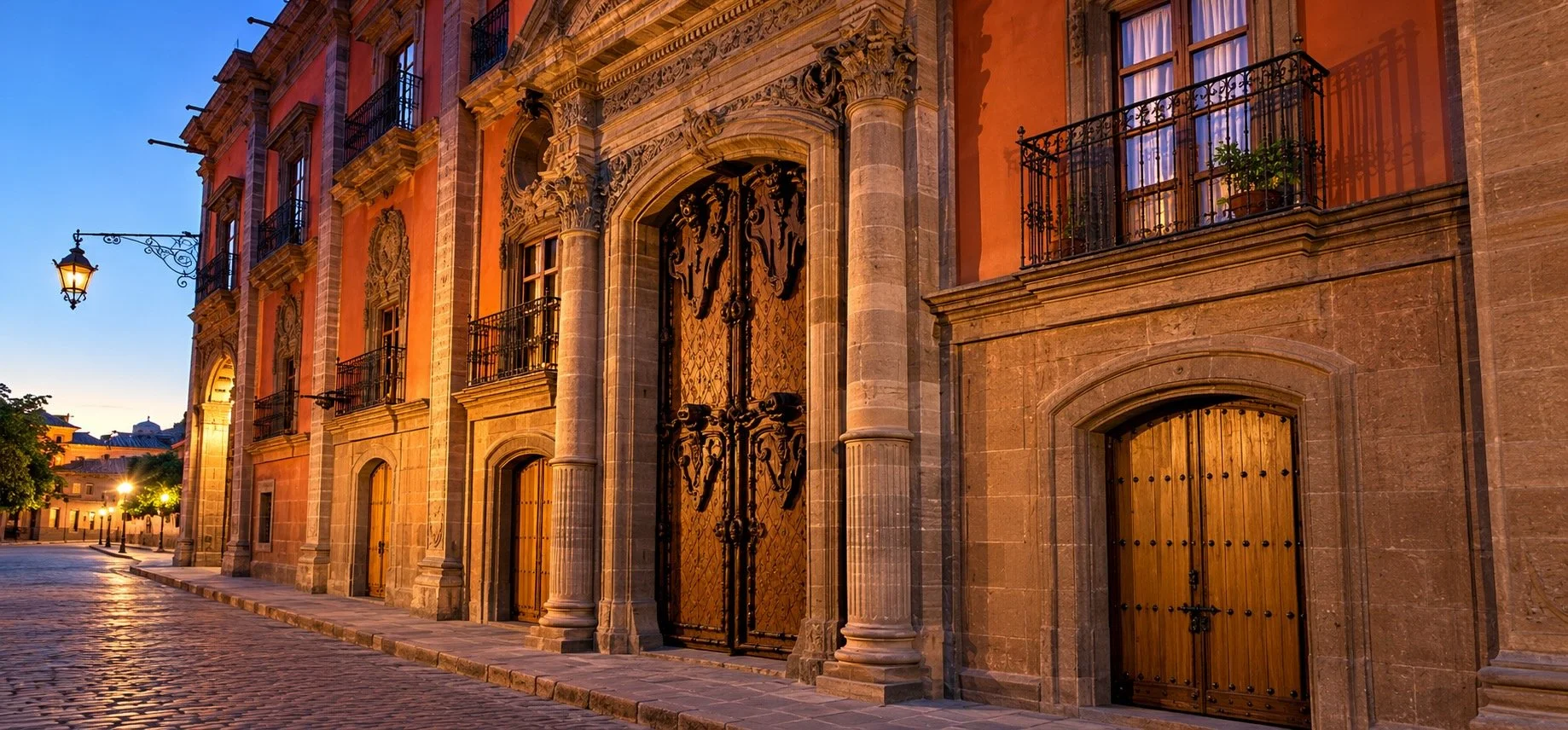
The De La Canal family home. Casa Mayorazgo.
Not all street names honor national heroes. Some commemorate the influential families whose wealth and power helped shape the city during the colonial era.
Canal Street takes its name from the De la Canal family, one of the wealthiest and most influential families in colonial San Miguel. Their fortune helped finance churches, civic projects, and many of the buildings that still define the character of Centro Histórico today. Their former residence remains one of the most recognizable buildings facing the Jardín.
Umarán recalls another prominent family that played an important role in the city’s development.
Walking these streets today, it is easy to forget that San Miguel was once a prosperous colonial center where a handful of powerful families exercised enormous influence over local commerce and civic life.
Many of the buildings associated with these families remain standing today. In fact, one of the reasons Centro Histórico remains so desirable is the remarkable preservation of its colonial architecture. Readers interested in learning more about the area may enjoy our article, Centro Histórico Neighborhood Guide: Living in the Heart of San Miguel de Allende.
When Streets Were Named After Everyday Work
Some of the most interesting street names reveal what daily life looked like centuries ago.
Mesones comes from the Spanish word mesón, meaning inn. Before highways and automobiles, this area was lined with inns serving merchants, travelers, and muleteers moving goods across central Mexico.
Zacateros derives from zacate, or fodder. The street was associated with vendors who sold feed for horses, mules, and livestock. In an era when transportation depended on animals rather than engines, this was an essential business.
Tenerías recalls the tanneries that once operated nearby. Obraje refers to colonial textile workshops where cloth was woven and manufactured.
These names offer a fascinating glimpse into a San Miguel that looked very different from the one we know today. Behind the galleries, boutique hotels, and rooftop restaurants was once a hardworking commercial town filled with artisans, traders, laborers, and craftsmen.
Understanding the stories behind these names often changes how people experience the city. What first appears to be a charming colonial town gradually reveals itself as a place with deep layers of history, culture, and tradition. It’s one of the reasons so many visitors eventually choose to stay longer, or even make San Miguel home. We explore that experience further in Living in San Miguel de Allende: What It’s Really Like and A Deeper Look at Life in San Miguel de Allende.
A City Shaped by Faith
Religion played a central role in the city’s early development, and many street names preserve that legacy.
San Francisco, San Felipe, Loreto, San Antonio, and Jesús all reflect the influence of churches, religious orders, patron saints, and mission traditions that helped establish the settlement.
Even today, many of these streets lead directly to churches that remain active centers of worship and community life. They remind us that faith was woven deeply into the city’s foundation and continues to shape its identity.
Visitors often discover that every neighborhood has its own unique character and traditions. The influence of history, religion, and local culture continues to shape how different parts of the city feel today.
The Landscape Before the Pavement
Not every street was named after a person or profession.
Some names describe the physical landscape that existed before modern development.
Quebrada means ravine or gully and reflects the natural contours of the terrain. El Chorro takes its name from the spring that supplied water to the earliest settlement. Cuesta de San José refers to an uphill route leading toward a district associated with Saint Joseph.
Salida Real a Querétaro marks what was once the royal road connecting San Miguel to Querétaro, an important route for commerce and travel during the colonial period.
These names preserve clues about what the city looked like long before asphalt, sidewalks, and traffic lights arrived.
The Curious Stories Behind Relox and Callejón de los Muertos
A few street names continue to spark questions even among longtime residents.
One of the most famous is Relox. Newcomers often assume the name is misspelled, but it actually preserves an older spelling of the Spanish word reloj, meaning clock. The street was named for a public clock that once served as an important landmark.
Then there is Callejón de los Muertos, the Alley of the Dead.
Like many old places, San Miguel has accumulated its share of legends over the centuries. Stories surrounding the alley vary depending on who is telling them, but the mysterious name has endured through generations and remains one of the city’s most intriguing curiosities.
Reading the City One Street at a Time
The next time you’re walking through Centro, pause for a moment and look up at the street signs.
You may discover that what seems like an ordinary name is actually a window into the city’s past. A revolutionary hero. A wealthy colonial family. A long-forgotten trade. A natural spring. An old legend.
One of the reasons people fall in love with San Miguel de Allende is that history remains part of everyday life. Whether you’re exploring Centro Histórico, wandering through Guadalupe, considering a move to San Antonio, or looking at homes in one of the city’s quieter residential areas, the stories behind the street signs provide a deeper appreciation of the community.
For readers interested in exploring the city’s different neighborhoods, we recommend A Guide to the Key Neighborhoods in San Miguel de Allende, Where to Live in San Miguel de Allende: Choosing the Right Area, and The Best Areas in San Miguel de Allende for Different Types of Buyers.
The streets themselves are telling a story. All we have to do is listen.